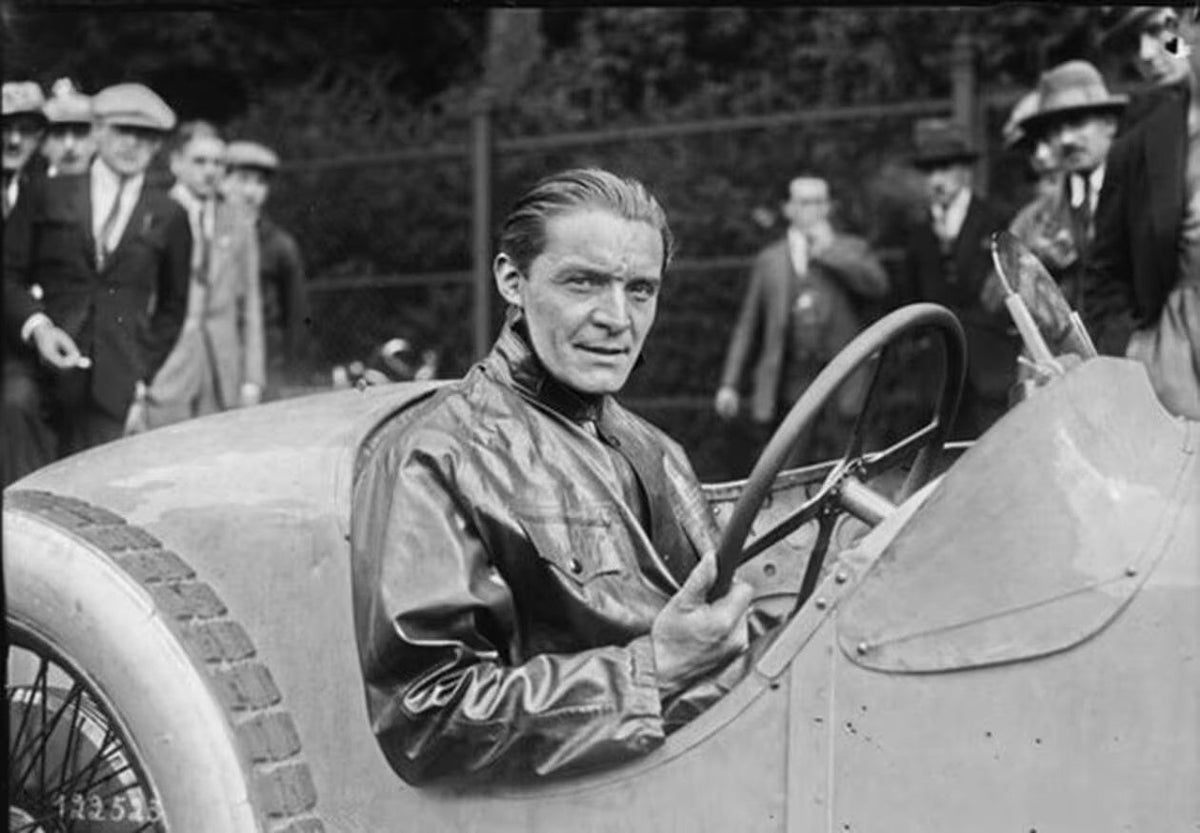
Robert Benoist, the first French World Champion
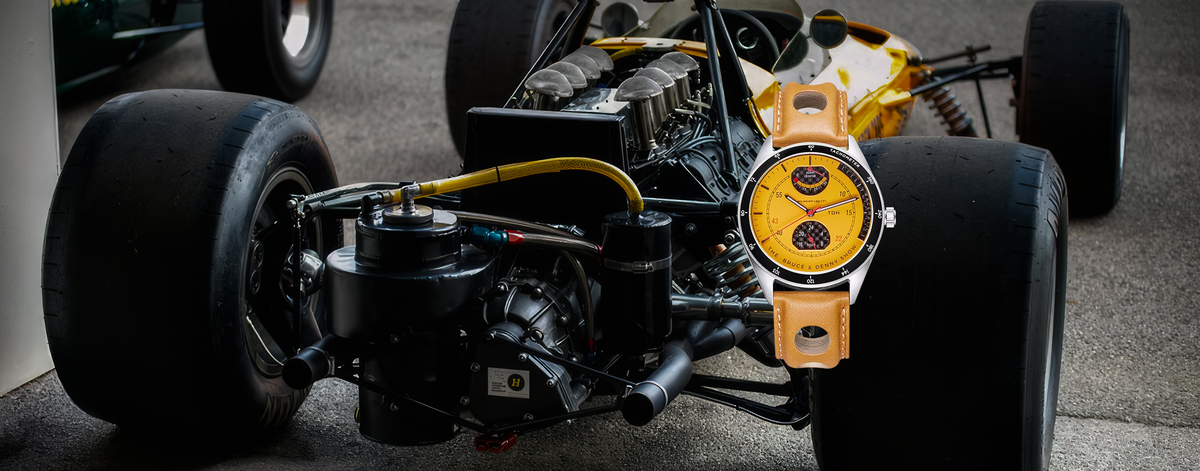
It is decided: one day, Arpiem will create a watch in memory of Robert Benoist.
Robert Benoist was born in 1895. The son of the Baron de Rothschild’s gamekeeper, he grew up on the outskirts of the Paris region and began training as a mechanic at the age of 13.
Mobilized in 1914, he began the First World War in the infantry and was quickly transferred to the aviation corps, where he would become a pilot and then an instructor. Upon returning to civilian life, Robert Benoist was bored. He would satisfy his need for thrills through automobiles: starting in 1920, he was put in charge of developing cyclecars for Moray, which he entered into motor racing, and later for Samson.
In 1924, Louis Delage noticed him in a race and decided to enlist his services. The first great victory came in 1925 with the ACF Grand Prix at Montlhéry. It was during this race that Antonio Ascari lost his life. Benoist drew attention and gained popularity by laying his winner's wreath at the site of Ascari’s accident.
In 1926, Delage debuted the 15S8 model, well ahead of its time with its very low center of gravity and magnificent V8 engine. 1927 would be the year of success: Robert Benoist won the GPs of Brooklands, Montlhéry, San Sebastián, and Monza. Delage was crowned World Champion of Manufacturers, and Benoist received the honorary title of World Champion of Drivers, as only the manufacturers' title was officially awarded at that time. Financially drained by its racing investments, Delage withdrew at the end of the 1927 season.
 The 1927 World Champion DELAGE 15S8
From then on, Benoist would enter races more sporadically. In 1929, he became the director of the new Grand Garage de Banville, located near Place Pereire in the 17th arrondissement of Paris. This garage was like a massive ocean liner stranded on land; covering a total area of over 20,000 m², it spanned 7 levels—2 underground and 5 above ground—all connected, of course, by wide driving ramps. On the roof, there were 3 tennis courts, a putting green, a gymnasium, and a restaurant!
For its inauguration, Benoist imagined the most improbable motor race ever organized: the GRAND GARAGE BANVILLE HILLCLIMB. A 600-meter course through the various levels of the garage. The affair caused quite a stir. 15 cars participated, but Benoist chose not to time the runs, fearing an overly optimistic driver might drive off the edge. 100 years ago, the word “event” already had its full meaning! (Don't forget that it was in 1925 that André Citroën illuminated the Eiffel Tower with his name…).
 The Grand Garage Banville hillclimb (Paris 17th)
Then Benoist joined Bugatti, first as director of the Paris showroom on the Champs-Élysées, and then as head of the competition department. Ettore Bugatti wanted to take on the 24 Hours of Le Mans and entrusted the adventure to him. He won it in 1937 with his co-driver Jean-Pierre Wimille, behind the wheel of the famous Bugatti 57G, nicknamed "the tank." Robert Benoist hung up his helmet for good after that winning race.
 The BUGATTI "Tank" 57G
The Second World War broke out. It was the collapse, and with his friend Jean-Pierre Wimille, he went to England where both were recruited as secret agents by the SOE (Special Operations Executive). Benoist’s mission was to recover weapon parachute drops and to create and organize groups in France capable of carrying out sabotage on behalf of the Allies.
Arrested twice by the Gestapo, Robert Benoist managed to escape both times within the first few minutes of his detention and return to England. His third arrest, while he was visiting his dying mother in Paris, would prove fatal. He was deported to Buchenwald where he was assassinated, hanged on September 9, 1944.
As he was not affiliated with Free France but rather with the British government, Robert Benoist did not receive the honors and recognition he deserved.
Decidedly, the chaos of the 20th century created some incredible destinies.