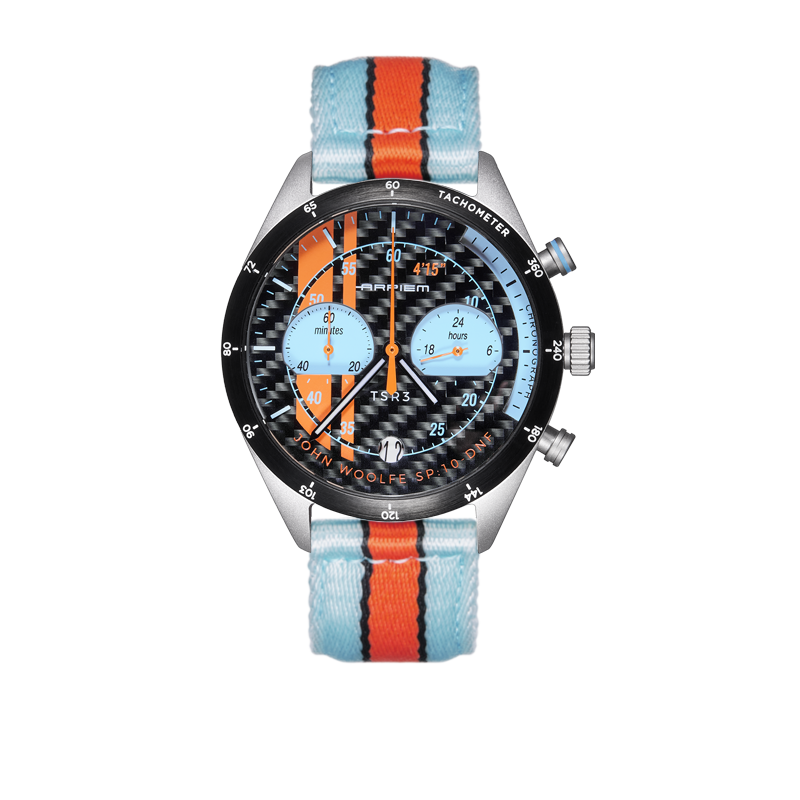
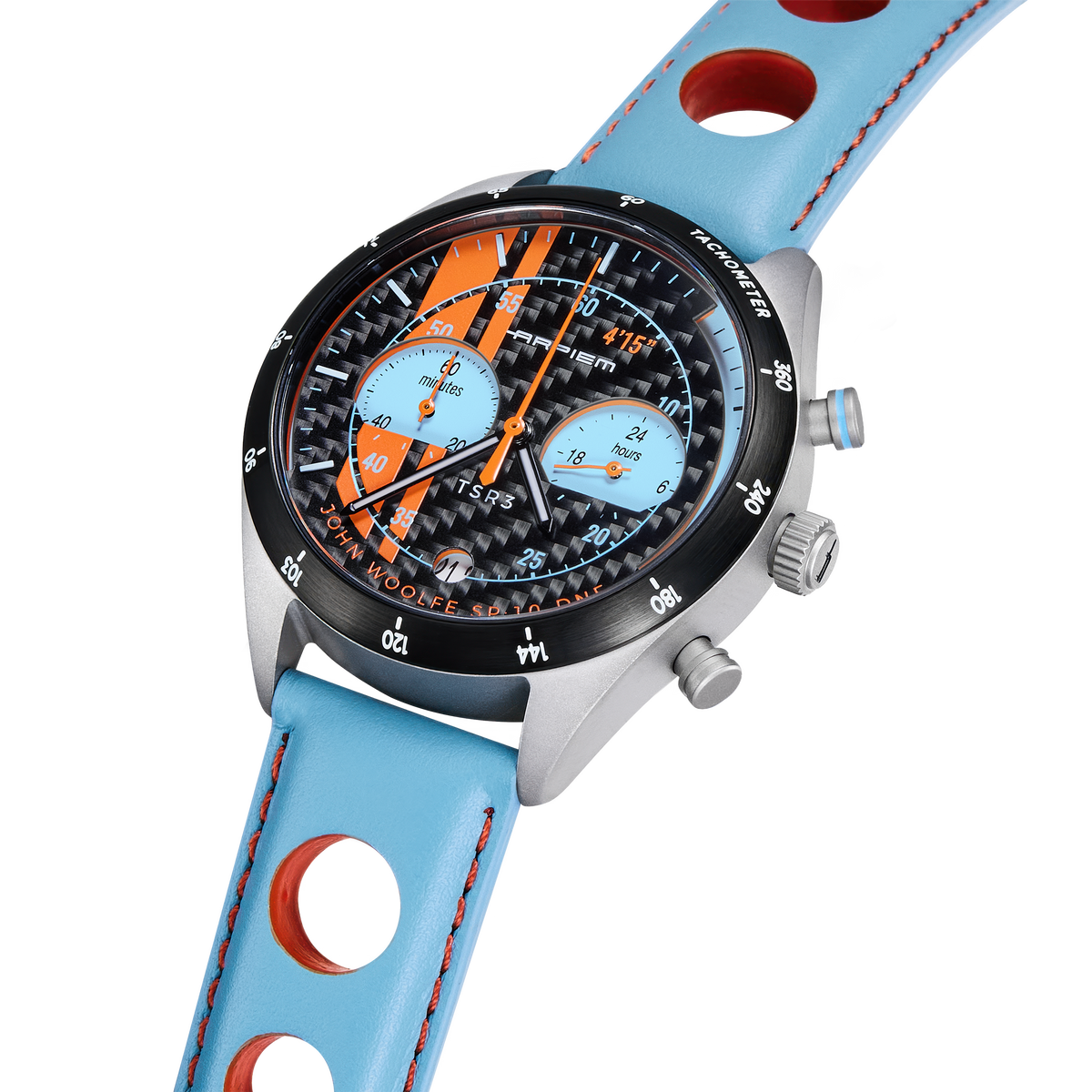
The circumstances surrounding the accident and death of John Woolfe during the race are such that they deserve to be told.
John Woolfe was a wealthy British amateur driver who tried his hand at the 24 Hours of Le Mans in 1968. Captivated, he decided to return, stacking the odds in his favor to put in a good performance.
To do so, he purchased a Porsche 917 from the Porsche factory in the spring of 1969. The car, designed to finally bring Porsche to the highest level of endurance racing, had been unveiled a few months earlier and was making its racing debut. Its reputation was appalling: it was the most powerful and fastest car in the Sport category, but it suffered from high-speed instability that made it dangerous to drive. This problem would not be solved until the winter of 1970, empirically but effectively, by John Wyer's team, which gave birth to the famous 917 K version. Many professional drivers refused to get behind the wheel of it in a race that year.
John Woolfe did not care and took delivery of his 917 at Le Mans at the start of race week. The car qualified in 10th position, driven by Herbert Linge, a Porsche factory driver "loaned" to Woolfe Racing for the event. Porsche recommended that Woolfe let Linge, his professional teammate, take the start of the 24-hour race. Woolfe did not follow this advice: he did not have total confidence in the reliability of his brand-new 917 and absolutely wanted his family, who were present at Le Mans, to see him in action. So he would take the start.
The rest is tragic; John Woolfe would not complete the first lap of the race. He ran across the track, like all the other competitors (with the famous exception of Jacky Ickx), to reach his car, jumped in, and neglected to fasten his safety harness in order to save a few seconds at the start. Returning toward the starting straight in twelfth position, he tackled the Maison Blanche Esses at full speed. Likely a victim of the 917's chronic instability, he put a wheel on the grass. The car spun out and smashed into the verge. Woolfe was ejected from the cockpit, and the 917 was sliced in two. He died instantly.
This accident is particularly bitter. First of all, Woolfe was the first private entrant to trust Porsche with the 917. He was not rewarded for it, to say the least.
Furthermore, he only covered... 12 kilometers in the race at the wheel of the 917 before his fatal excursion off the track (and also... only 4 minutes and 15 seconds of racing behind the wheel, a figure reported on the dial of the TSR3).
Finally, and we can of course be thankful for this, John Woolfe is the only driver who would lose his life at the wheel of the 917, which may be surprising when taking into account how dangerous it was in its early days and, above all, the number of fatal accidents that occurred in racing at the turn of the 70s (between 1969 and 1971, one could mention, without being exhaustive, Piers Courage, Pedro Rodriguez, Jo Siffert, Jochen Rindt, and Bruce McLaren).
This sad story would of course not stop the Porsche 917 from becoming one of the most iconic race cars ever built. The Woolfe accident, however, would signal the end of the Le Mans-style start, outside the car, which was a hallmark of the race. From 1970 onwards, drivers would start the race while seated in their cars.